Nils Müller · 5 October 2026
Halden's Beekeepers Collaborate on Pollinator Pathways Linking Urban and Rural Zones
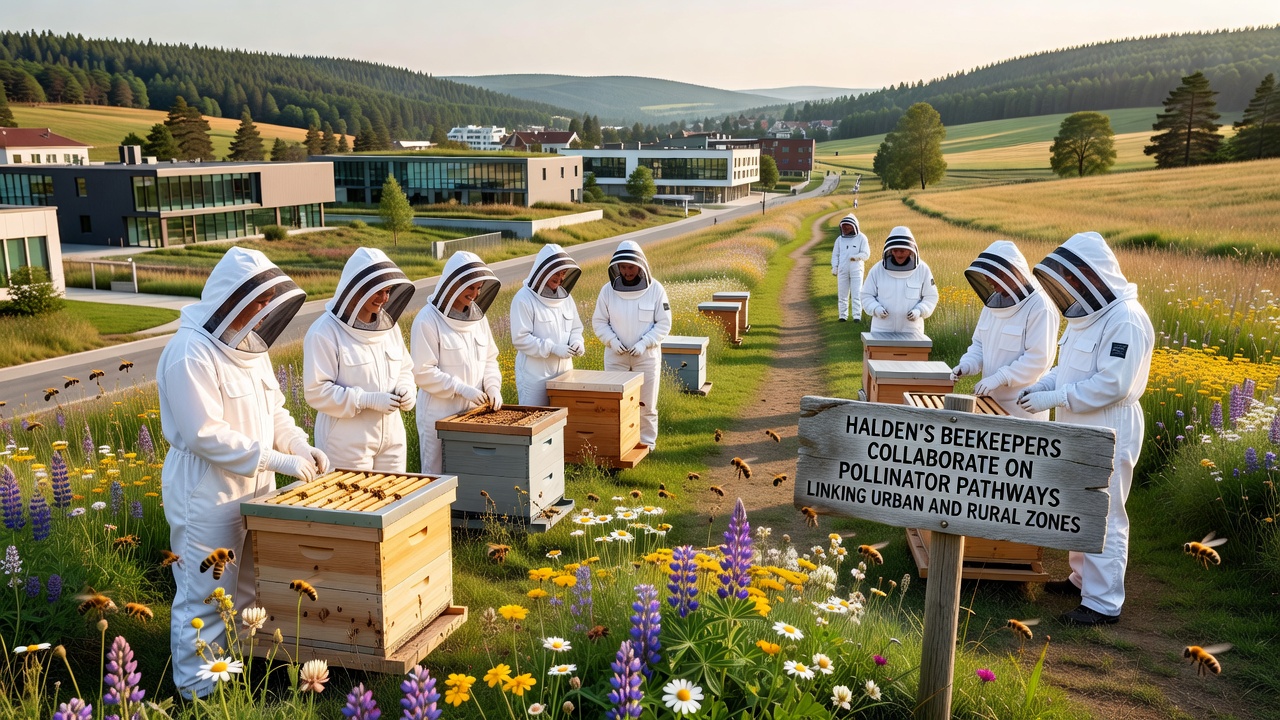
Beekeepers across Halden have established coordinated networks that create continuous corridors of flowering plants and nesting sites, and these pathways stretch from dense urban neighborhoods into surrounding agricultural fields while supporting declining insect populations. Local groups began formal meetings in early 2025 after monitoring data showed reduced bee activity in fragmented landscapes, and the initiative now involves both hobbyists and commercial operators who share mapping tools and planting schedules.
Background on Local Pollinator Challenges
Halden sits in a region where urban expansion meets traditional farmland, which creates sharp edges that limit bee movement between food sources, and researchers from the Norwegian Institute for Nature Research have documented drops in wild bee species along those boundaries. Data collected over five years indicate that solitary bees travel shorter distances when green spaces remain isolated, so groups decided to focus on linear plantings that connect parks, roadside verges, and field margins. The approach draws on established connectivity principles rather than isolated garden projects.
Formation of the Collaboration
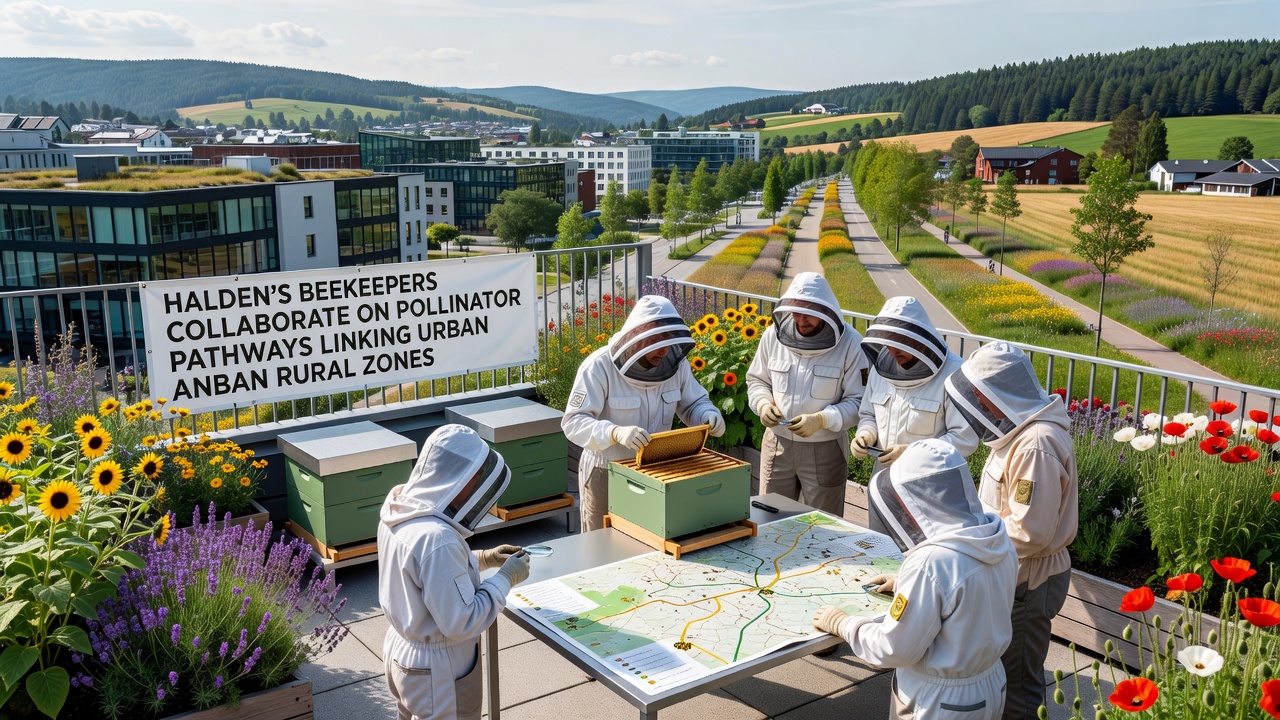
Representatives from city apiaries and rural farms formed a steering committee that meets monthly at the Halden community center, and members rotate leadership roles to keep decisions distributed. They adopted open-source mapping software to mark existing flower patches and identify gaps, then prioritized sites where new seed mixes could bridge distances of several kilometers. Funding came through municipal environmental grants and contributions from local businesses that supply native seed varieties suited to the regional climate.
Pathway Design and Implementation
Participants selected plant species that bloom in overlapping sequences from April through October, and they placed emphasis on early spring and late autumn flowers to extend foraging windows. Urban sections feature rooftop gardens and pocket parks planted with clover and willowherb, while rural segments incorporate hedgerows and wildflower strips along tractor paths. Coordination ensures that no single property owner bears the full maintenance load, and volunteers conduct joint workdays twice each season.
Monitoring and Data Collection
Beekeepers installed standardized monitoring stations at regular intervals along the corridors, and they record hive health metrics alongside counts of visiting insects. Preliminary results shared at the September 2026 regional conference showed increased pollen diversity in samples taken from both urban and rural hives, and observers noted higher numbers of bumblebees crossing former barrier zones. The group plans additional surveys in October 2026 to capture peak autumn activity before winter preparations begin.
Partnerships with External Organizations
Links formed with the Norwegian Environment Agency provided access to national pollinator guidelines, and participants adapted those recommendations to local soil conditions. A separate exchange with researchers at the University of Oslo supplied protocols for tracking genetic diversity among managed and wild bee populations. These connections remain focused on technical support rather than direct oversight, which preserves local control over day-to-day operations.
Community Involvement and Education
Schools in Halden incorporated pollinator lessons into science classes, and students helped plant demonstration strips near playgrounds. Public workshops taught residents how to identify beneficial plants and avoid pesticide use during bloom periods, and attendance records indicate steady participation across age groups. Local media covered several workdays, which increased awareness without requiring paid advertising.
Challenges Encountered
Weather variability affected germination rates in the first planting season, and some sections required reseeding after heavy spring rains. Property access negotiations took longer than expected in a few rural zones where owners expressed concerns about equipment movement, yet repeated site visits and shared data on bee benefits resolved most issues. Equipment sharing among members reduced individual costs and built trust across the network.
Conclusion
The Halden collaboration continues to expand corridor segments each season, and ongoing measurements will determine whether the connected habitats produce measurable population gains over the next five years. Similar efforts in other Norwegian municipalities have reported comparable early indicators, which suggests the model could apply elsewhere when groups coordinate across urban and rural boundaries.